Accumulator Vessels
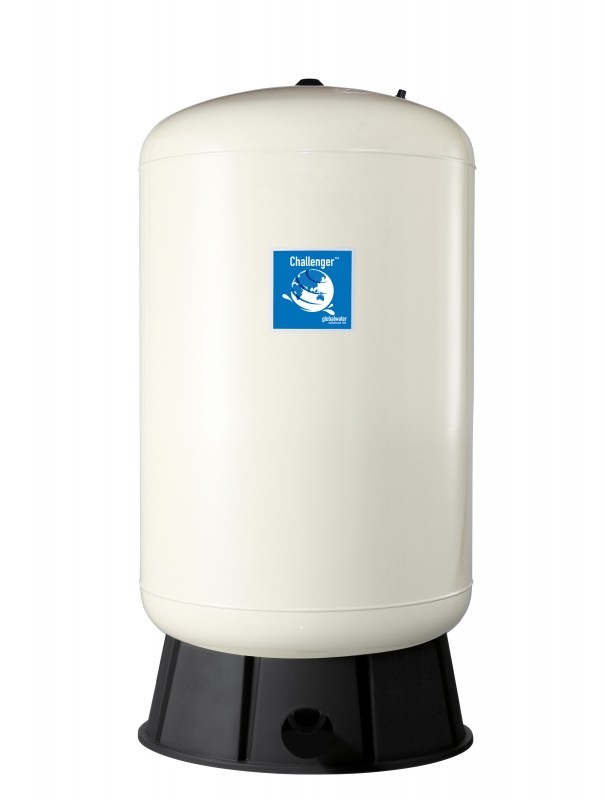
100 litre accumulator vertical GWS PWB-100LV


- Established 1975
- Trusted by thousands of customers
Accumulators – Low Water Flow Applications
Accumulators are an effective solution for combating inconsistent water pressure and flow, especially during high-demand periods such as busy mornings and evenings.
How Accumulators Work:
Accumulators store water volumes under static or resting pressure, ensuring a steady and reliable flow even when demand causes fluctuations in the mains network.
Benefits:
- Consistent Water Flow: Accumulators provide stable pressure, ensuring multiple taps and appliances can operate simultaneously without interruption.
- Overcomes Plumbing Restrictions: Even if the mains network provides sufficient pressure, the plumbing from the street to your property can reduce pressure and flow. Accumulators compensate for this loss.
- Improved User Experience: Reliable pressure and flow enhance the functionality of showers, taps, and other water outlets.
Accumulators are an excellent choice for homes or buildings experiencing low water flow, offeri
Properties that have a shared supply are more likely to experience low water pressure and flows especially in peak times.
If your mains pressure isn’t above 2 bar static/resting we also recommend a pressure boosting pump to bring this up to 3 to 4 bar.
DAB ACF1 booster Pump –
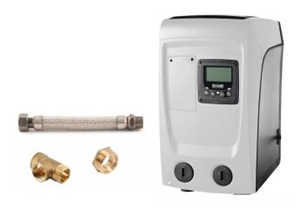
Order today and experience a powerful taps again.
Upstream Kits –
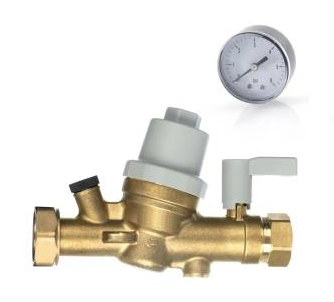
More about this product
Maintenance free and WRAS approved.
- Diaphragm design
- Patened stainless steel water connection
- Virgin polypropylene liner
- Condensation reducing design
- Two-part polyurethane, epoxy primed paint finish
- Max working pressure 10 bar
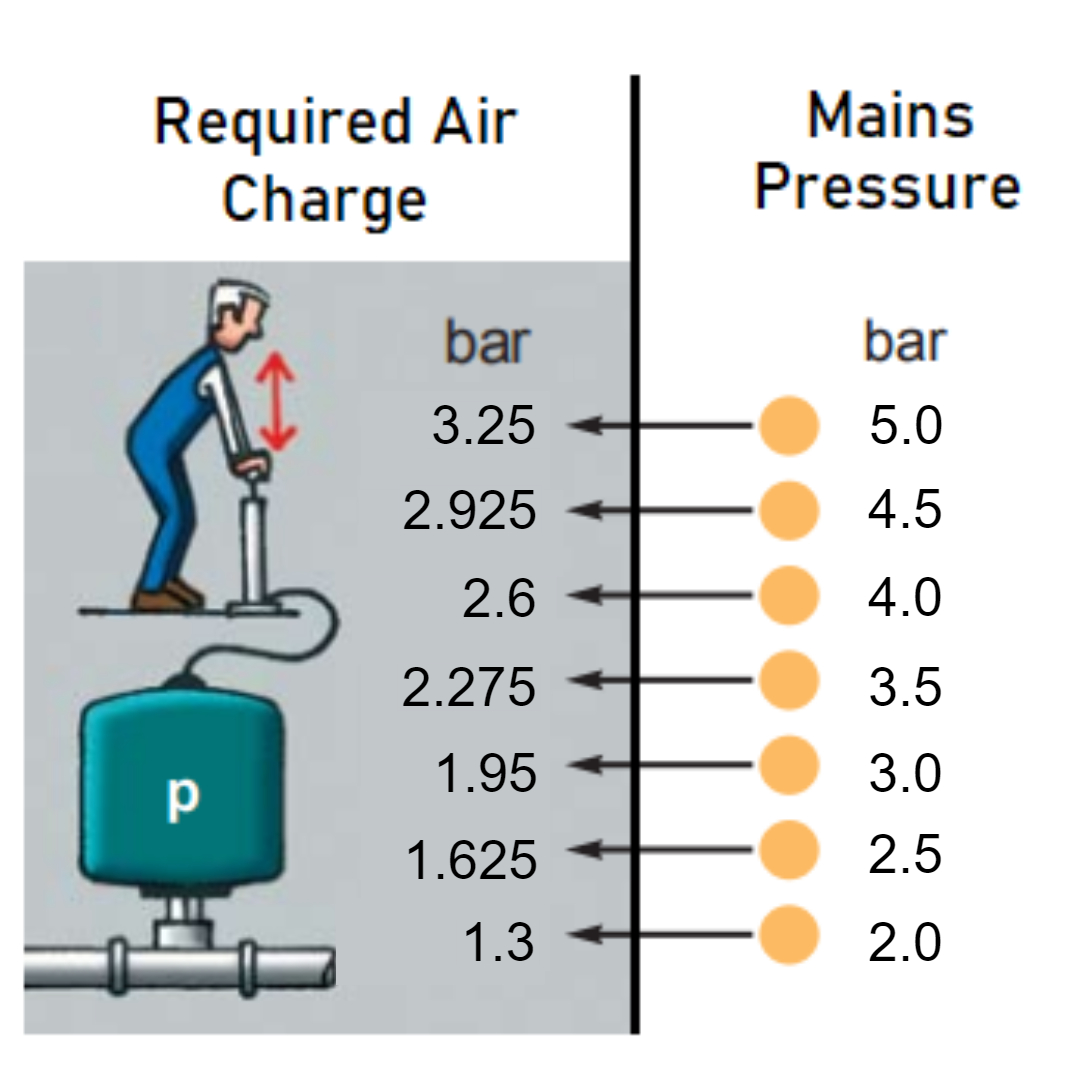
- Factory pre-charge 1.4 bar
- Max temp 90 degree C
Uses –
- 1 to 2 bedroom house – 60 litre,100 litre or 200 litre
- 2 to 3 bedroom thouse – 200 litre, 250 litre or 300 litre
- 3 bedrooms and above – 300 litre or 450 litre
Remember GWS accumulators operate on a 60% volume to use ratio meaning a 300 litre vessel gives 180 litres of powerful water before returning to mains flow.
To find your vessel usage times vessel size by 0.6.
An average shower/bath runs at 10-12 litres/min. So 300 litre GWS x 0.6 = 180 litres. This will operate 2 showers at 12 litres/min for 180 / (12 litres/min x 2 ) = 7.5 minutes.
-
data sheet PDFDownload
-
manual PDFDownload
-
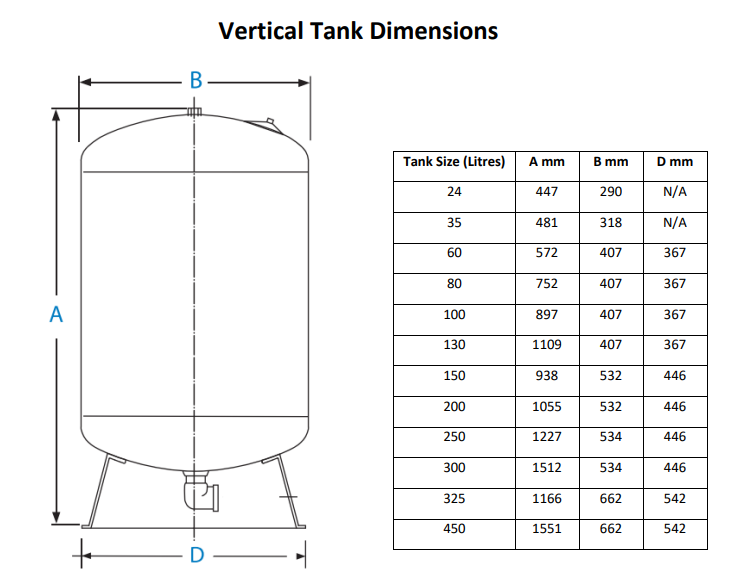
Dimensions PDFDownload
Standard delivery:
Standard delivery is free on most orders. Some items may incur a delivery charge depending on weight, size or value. Any applicable charge will be displayed at checkout.
Deliveries will typically be made between 7am and 6pm, Monday to Friday (excluding public holidays).
Next day delivery:
Next working day delivery is available for a £16.50 + VAT delivery charge.
Orders must be placed before 12 noon to qualify for next working day delivery. Orders placed after 12 noon on Thursday but before noon on Friday will be delivered the following Monday. Orders placed after 12 noon on Friday will be delivered on Tuesday.
Pallet/Large/Difficult items:
Some large, heavy or difficult to transport items may incur an additional delivery charge. Please contact us for a delivery quote before ordering.
You may also need

The WaterBoost WB-Compact 4.5 ACF1 is a compact floor-mounted variable speed pump designed to charge external accumulator vessels to up to 4.5 bar. If your…
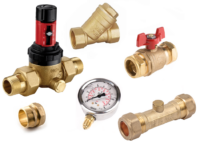
Supplied as the Mainsboost Upstream Monobloc 22/28mm. This kit now ships as a single pre-assembled unit rather than a box of loose fittings — the…
Related products

Lowara horizontal expansion vessel. The pressure vessel is designed to provide a storage facility and pressure reservoir for water at temperatures up to 70oC.

20 litre horizontal expansion vessel with 3/4" BSP male connection.
Float switches can be used to operate submersible pumps via a control panel and is rated for sewage and wastewater pump applications. The switch can…
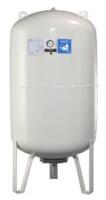
GWS SuperFlow Global Water Solutions’ SuperFlow™ tanks are ideally suited for applications where high-pressure ratings are required. These applications include booster systems, heating expansion and…
Lowara horizontal expansion vessel. The pressure vessel is designed to provide a storage facility and pressure reservoir for water at temperatures up to 70oC. Common…
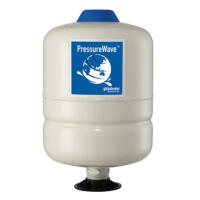
Cold water accumulator vessels. Maintenance free and WRAS approved. Diaphragm design Patened stainless steel water connection Virgin polypropylene liner Condensation reducing design Two-part polyurethane, epoxy…
Frequently Asked Questions
Quick answers to common questions about the 100 litre accumulator vertical GWS PWB-100LV. For technical specifications, see the product details above; for sizing or installation advice, contact our team. If you have any other questions, we're happy to help.
What is a mains pressure boosting system?
A mains pressure boosting system increases the pressure and flow of water from the incoming mains supply into a property. It typically combines a pump and a storage or expansion tank, drawing water from the mains and delivering it to taps, showers and appliances at a stronger, more consistent pressure. They are used where the incoming mains is too weak to serve modern outlets reliably.
When do I need a mains booster pump?
You normally need a mains booster if static mains pressure is below 1.5 to 2 bar, if showers run weakly when other taps are open, or if combi boilers struggle to deliver hot water. Anglian Pumping recommends checking static pressure at the stop tap before specifying a system, then choosing a model rated for the number of bathrooms and outlets in the property.
What size mains booster do I need for my home?
Sizing depends on the number of bathrooms, the type of fittings and the static mains pressure. As a guide, a 1 to 2 bathroom property with combi boiler or single shower often needs 1.6 to 3 bar boost. A 2 to 3 bathroom property typically needs 3 to 4.5 bar with an integral break tank. Larger homes need a tank-and-pump system such as the DAB Esybox with Esytank or a Powertank set.
What is an accumulator tank?
An accumulator tank is a pressurised vessel that connects directly to the mains supply and stores water under pressure. When a tap or shower opens, water discharges immediately from the vessel at full mains pressure rather than drawing only from the street main. This delivers stronger, more consistent flow at peak times. Accumulators have no pump and no moving parts so they are maintenance free and silent.
When should I use an accumulator instead of a pump?
An accumulator is the right solution when static mains pressure is adequate – above 2 bar – but flow is poor or drops during peak demand. It boosts available flow without adding a pump, energy use or noise. If static pressure is below 2 bar, a booster pump is needed instead, or an accumulator combined with a charge pump such as the WaterBoost ACF1.
What size accumulator do I need?
Accumulators are typically sized on a 60 per cent usable rule – a 300 litre vessel delivers around 180 litres of boosted water per cycle. As a guide, a 2 to 3 bedroom home suits a 300 litre vessel such as the GWS GCB-300LV. Larger 4 to 5 bedroom homes or properties with multiple bathrooms typically need 450 to 600 litres. Vertical models save floor space, horizontal models suit lofts and roof spaces.