CH Multistage Pressure Set
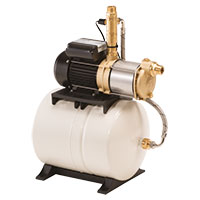
Stuart Turner CH 4-50 PS 44622

- Established 1975
- Trusted by thousands of customers
Stuart Turner Ch Multistage Pressure Sets – CH 4-50 PS 44622
The CH 4 pressure sets are designed to meet system demands in larger domestic and light commercial applications.
The multistage pump is mounted on to a WRAS approved 24 litre diaphragm tank providing a buffer of pressurised stored water. Ideally suited to boost stored cold water supplies to un-vented hot water cylinders/combination boilers where there is low or no mains water supply.
Supplied with G1 flexible hoses and adaptors.
More about this product
Technical Specification
| General | |
| Product code | 44622 |
| Guarantee | 2 years |
| WRAS approval | Approved materials |
| Features | |
| Pump type | Centrifugal |
| Mechanical seal | EPDM / Carbon / Ceramic |
| Anti-vibration feet | |
| Inlet strainer(s) | |
| Flexible hoses | 2 |
| Run on timer | 3 sec |
| Dry run protection | |
| Diaphragm tank size | 24 litres |
| Diaphragm tank water capacity | 12 litres |
| Materials | |
| Pump body | Brass / Stainless steel |
| Impeller | Stainless steel |
| Performance | |
| Maximum head (closed valve) | 4.9 bar |
| Performance @ 45 l/min | 4.6 bar |
| Performance @ 90 l/min | 3.2 bar |
| Maximum flow | 150 l/min |
| Minimum static inlet pressure | 1 metre |
| Maximum static inlet pressure | 10 metres |
| Maximum static outlet pressure | 13 metres |
| Maximum working pressure* | 900 kPa (9 bar) |
| Maximum ambient air temperature | 40 °C |
| Min / Max water temperature | Min 4 °C / Max 35 °C |
| Flow switch sensitivity (approx) | 1.0 l/min |
| Pressure vessel air pre-charge | 2.8 bar (40.6 psi) |
| Cut in flow | 1 l/min |
| Cut in pressure | 290 kPa (2.9 bar) |
| Connections | |
| Pump connections | G 1 male |
| Flexible hoses | |
| Connections | G 1 male x G 1 female x 300 mm long |
| Motor | |
| Type | Induction type, thermally protected |
| Duty rating | Continuous (S1) |
| Electrical | |
| Power supply/phase/frequency | 230 V a.c./ 1 / 50 Hz |
| Current (full load) | 7.3 Amps |
| Power consumption | 1655 Watts |
| Fuse rating | 13 Amps |
| Power cable (pre-wired) | 1.5 metres |
| Physical | |
| Enclosure protection | IPX5 |
| Length | 521 mm |
| Width | 280 mm |
| Height (excluding hoses) | 667 mm |
| Weight (including fittings) | 23.4 Kg |
* The maximum pressure that can be applied to the pump under any installation conditions.
-
performance PDFDownload
-
data sheet PDFDownload
-
instructions PDFDownload
-
dimensions PDFDownload
Standard delivery:
Standard delivery is free on most orders. Some items may incur a delivery charge depending on weight, size or value. Any applicable charge will be displayed at checkout.
Deliveries will typically be made between 7am and 6pm, Monday to Friday (excluding public holidays).
Next day delivery:
Next working day delivery is available for a £16.50 + VAT delivery charge.
Orders must be placed before 12 noon to qualify for next working day delivery. Orders placed after 12 noon on Thursday but before noon on Friday will be delivered the following Monday. Orders placed after 12 noon on Friday will be delivered on Tuesday.
Pallet/Large/Difficult items:
Some large, heavy or difficult to transport items may incur an additional delivery charge. Please contact us for a delivery quote before ordering.
Related products
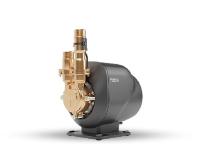
Designed to address the increasing challenge of low mains water pressure, the newly extended STORMBOOST lineup is fully WRAS Approved and now includes six innovative models: STORMBOOST 60, 80,…
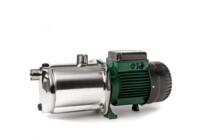

DAB Euroinox stainless steel centrifugal water pump particularly suitable for water supply in domestic installations smallscale agriculture gardening or pressure boosting..
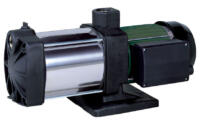
DAB multi-stage self-priming centrifugal water pump with excellent suction capacity even when there are air bubbles. Particularly suitable for water supply in domestic installations smallscale…
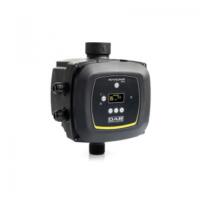
DAB Active Driver Plus are inverters used for the control of hydraulic pumps.Fields of application are domestic, industrial and agricultural constant pressure pressure pumping systems.…
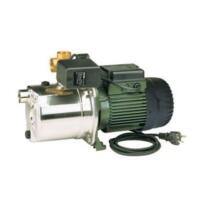
DAB Self-priming centrifugal water pump with excellent suction capacity even when there are air bubbles. Particularly suitable for water supply in domestic installations smallscale agriculture…
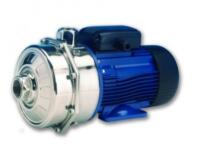

Lowara CAM 120/35/B 230v 101810040 Lowara CEA-CA series. A wide range of pumps for domestic and industrial applications. Single impeller CEA and dual impeller CA.…
Frequently Asked Questions
Quick answers to common questions about the Stuart Turner CH 4-50 PS 44622. For technical specifications, see the product details above; for sizing or installation advice, contact our team. If you have any other questions, we're happy to help.
What is a mains pressure boosting system?
A mains pressure boosting system increases the pressure and flow of water from the incoming mains supply into a property. It typically combines a pump and a storage or expansion tank, drawing water from the mains and delivering it to taps, showers and appliances at a stronger, more consistent pressure. They are used where the incoming mains is too weak to serve modern outlets reliably.
When do I need a mains booster pump?
You normally need a mains booster if static mains pressure is below 1.5 to 2 bar, if showers run weakly when other taps are open, or if combi boilers struggle to deliver hot water. Anglian Pumping recommends checking static pressure at the stop tap before specifying a system, then choosing a model rated for the number of bathrooms and outlets in the property.
What size mains booster do I need for my home?
Sizing depends on the number of bathrooms, the type of fittings and the static mains pressure. As a guide, a 1 to 2 bathroom property with combi boiler or single shower often needs 1.6 to 3 bar boost. A 2 to 3 bathroom property typically needs 3 to 4.5 bar with an integral break tank. Larger homes need a tank-and-pump system such as the DAB Esybox with Esytank or a Powertank set.
What is a water booster pump?
A water booster pump increases the pressure of an existing water supply to give stronger flow at taps, showers and appliances. It can be a small inline pump fitted to the incoming mains, or a larger pump and tank set that draws from a break tank to feed the whole house. Boosters do not create water – they raise the pressure of the water already coming in.
What is the difference between an inline booster and a tank-and-pump booster?
An inline booster connects straight onto the incoming mains and is limited to 12 litres per minute under UK water regulations – examples include the Salamander HomeBoost and WaterBoost WB-Compact. A tank-and-pump booster, such as the Grundfos Home Booster or DAB Esybox with Esytank, draws from a break tank and can deliver much higher flow rates for larger homes with multiple bathrooms.
What is a variable speed booster pump?
A variable speed booster uses an inverter to adjust pump speed in real time to match demand. It maintains constant pressure as outlets open and close, runs more quietly than a fixed-speed pump and typically saves up to 50 per cent of the energy a fixed-speed equivalent would use. The DAB Esybox, DAB Esybox Mini 3 and Grundfos Scala2 are common variable speed examples.