WaterBoost Slimline - Variable Speed
The WaterBoost Slimline — Variable Speed range is a cost-effective, space-saving solution to low water pressure or flow. At 600–700 mm wide it fits through a standard doorway and tucks neatly under the stairs, in a garage or in a utility room — ideal where floor space is at a premium in new or existing properties.
Its variable speed pump delivers up to 5 bar and 100 l/min, generating only the pressure your mains can’t — an energy-efficient, high-quality solution that keeps installation cost down. Built for 3–5 bedroom homes with poor pressure and limited room to spare.
Why choose the Slimline range?
Key specifications
| Pump type | Variable speed — only boosts the shortfall |
| Max pressure | Up to 5 bar |
| Max flow | Up to 100 l/min |
| Width | 600 mm (700 mm on the 500 L) — fits through a standard doorway |
| Siting | Under stairs, garage or utility room |
| Best for | 3–5 bedroom homes with poor pressure and limited floor space |
Where floor space is tight but performance can’t be, the WaterBoost Slimline Variable Speed range delivers strong, efficient pressure and flow in a footprint that fits through any doorway. Choose your model below.
Not sure which WaterBoost you need?
Five questions and the sizer picks the tank and pump for your house.
Size my system →
3 products
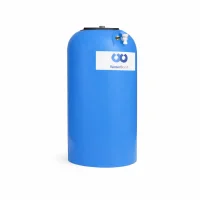
The WaterBoost WB-INT Slimline 300 is a complete, pre-built variable-speed water boosting system designed to solve low water pressure and flow in 3–5 bedroom homes.…
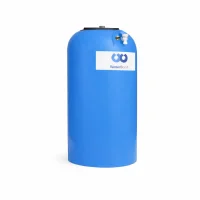
The WaterBoost WB-INT Slimline 500 is a complete, pre-built variable-speed water boosting system for high-demand 3–5 bedroom homes. A 500-litre WRAS-approved upright slimline tank pairs…
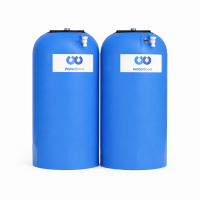
The WaterBoost WB-INT Slimline 600 is a twin-tank variable-speed water boosting system for 3–5 bedroom homes with heavier demand. Two 300-litre WRAS-approved slimline tanks (600L…
Frequently Asked Questions
Quick answers to common questions about the WaterBoost Slimline – Variable Speed. For technical specifications, see the product details above; for sizing or installation advice, contact our team. If you have any other questions, we're happy to help.
What is a mains pressure boosting system?
A mains pressure boosting system increases the pressure and flow of water from the incoming mains supply into a property. It typically combines a pump and a storage or expansion tank, drawing water from the mains and delivering it to taps, showers and appliances at a stronger, more consistent pressure. They are used where the incoming mains is too weak to serve modern outlets reliably.
When do I need a mains booster pump?
You normally need a mains booster if static mains pressure is below 1.5 to 2 bar, if showers run weakly when other taps are open, or if combi boilers struggle to deliver hot water. Anglian Pumping recommends checking static pressure at the stop tap before specifying a system, then choosing a model rated for the number of bathrooms and outlets in the property.
What size mains booster do I need for my home?
Sizing depends on the number of bathrooms, the type of fittings and the static mains pressure. As a guide, a 1 to 2 bathroom property with combi boiler or single shower often needs 1.6 to 3 bar boost. A 2 to 3 bathroom property typically needs 3 to 4.5 bar with an integral break tank. Larger homes need a tank-and-pump system such as the DAB Esybox with Esytank or a Powertank set.
What is a water booster pump?
A water booster pump increases the pressure of an existing water supply to give stronger flow at taps, showers and appliances. It can be a small inline pump fitted to the incoming mains, or a larger pump and tank set that draws from a break tank to feed the whole house. Boosters do not create water – they raise the pressure of the water already coming in.
What is the difference between an inline booster and a tank-and-pump booster?
An inline booster connects straight onto the incoming mains and is limited to 12 litres per minute under UK water regulations – examples include the Salamander HomeBoost and WaterBoost WB-Compact. A tank-and-pump booster, such as the Grundfos Home Booster or DAB Esybox with Esytank, draws from a break tank and can deliver much higher flow rates for larger homes with multiple bathrooms.
What is a variable speed booster pump?
A variable speed booster uses an inverter to adjust pump speed in real time to match demand. It maintains constant pressure as outlets open and close, runs more quietly than a fixed-speed pump and typically saves up to 50 per cent of the energy a fixed-speed equivalent would use. The DAB Esybox, DAB Esybox Mini 3 and Grundfos Scala2 are common variable speed examples.