Clarke CSE Pumps
This self-priming submersible pump can be used for continous running and provides top quality general duty for clean water pumping.
The strong, durable, double insulated case offers a tough corrosion and rust proof construction. This Clarke pump also benefits form a low consumption motor with overload protection and an anti-airlock valve, complete with a long life ceramic shaft seal for reliability.

2 products
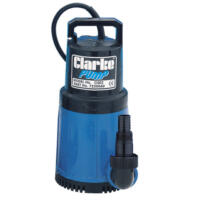
This self-priming submersible pump can be used for continous running and provides top quality general duty for clean water pumping. The strong, durable, double insulated…
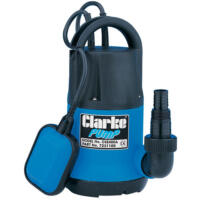
The CSE400A submerisble water pump is manufactured from tough, corrosion and rust proof materials and is ideal for a wide range of clean ater pumping applications.…
Frequently Asked Questions
Quick answers to common questions about the Clarke CSE Pumps. For technical specifications, see the product details above; for sizing or installation advice, contact our team. If you have any other questions, we're happy to help.
What is a submersible pump?
A submersible pump is designed to operate fully submerged in the liquid it is moving. The motor is sealed inside the pump body and cooled by the surrounding water. Submersibles are used for drainage, sewage, septic tanks, deep wells and boreholes, and for raising water from sumps, cellars and floodwater. Many stocked at Anglian Pumping handle solids in suspension.
Can submersible pumps handle solids and sewage?
Yes – some submersibles are designed for clean water only, others handle solids up to 50 mm or full raw sewage. Anglian Pumping stocks ABS, BBC, Flygt and T-T Submersibles ranges that include vortex, single channel and grinder impellers for different solids handling requirements. Always match the pump to the maximum solid size and the type of effluent it will see.
When should I use a submersible pump instead of a surface pump?
Use a submersible when the water level is more than around 8 metres below the pump installation point – surface pumps cannot self-prime beyond that depth. Submersibles are also better when the liquid contains solids, when noise must be minimised, or when the pump needs to operate in confined spaces such as sumps and chambers where a surface pump would not fit.